Ulysmedia receives warning from Kurultai after questions about Caspian Sea tragedy
Ulysmedia.kz has received a warning from the Kurultai Administration after journalist Asem Gumarova asked questions about the deaths of 14 servicemen in the Caspian Sea. If she commits another “violation of the regulations”, she could lose her accreditation for six months.
The editorial office received a letter from Bolat Kalyanbekov, Deputy Head of the Kurultai Administration. The letter states that the journalist asked two questions that were unrelated to the stated agenda of the event, thereby violating the regulations.
It also says that if the violation is repeated, the correspondent may be stripped of her accreditation for six months.
“In the event of a repeated violation of the Regulations Governing Events Involving Media Representatives, we reserve the right to initiate the withdrawal of Asem Gumarova’s permanent accreditation at the Kurultai for a period of six months,” the letter states.
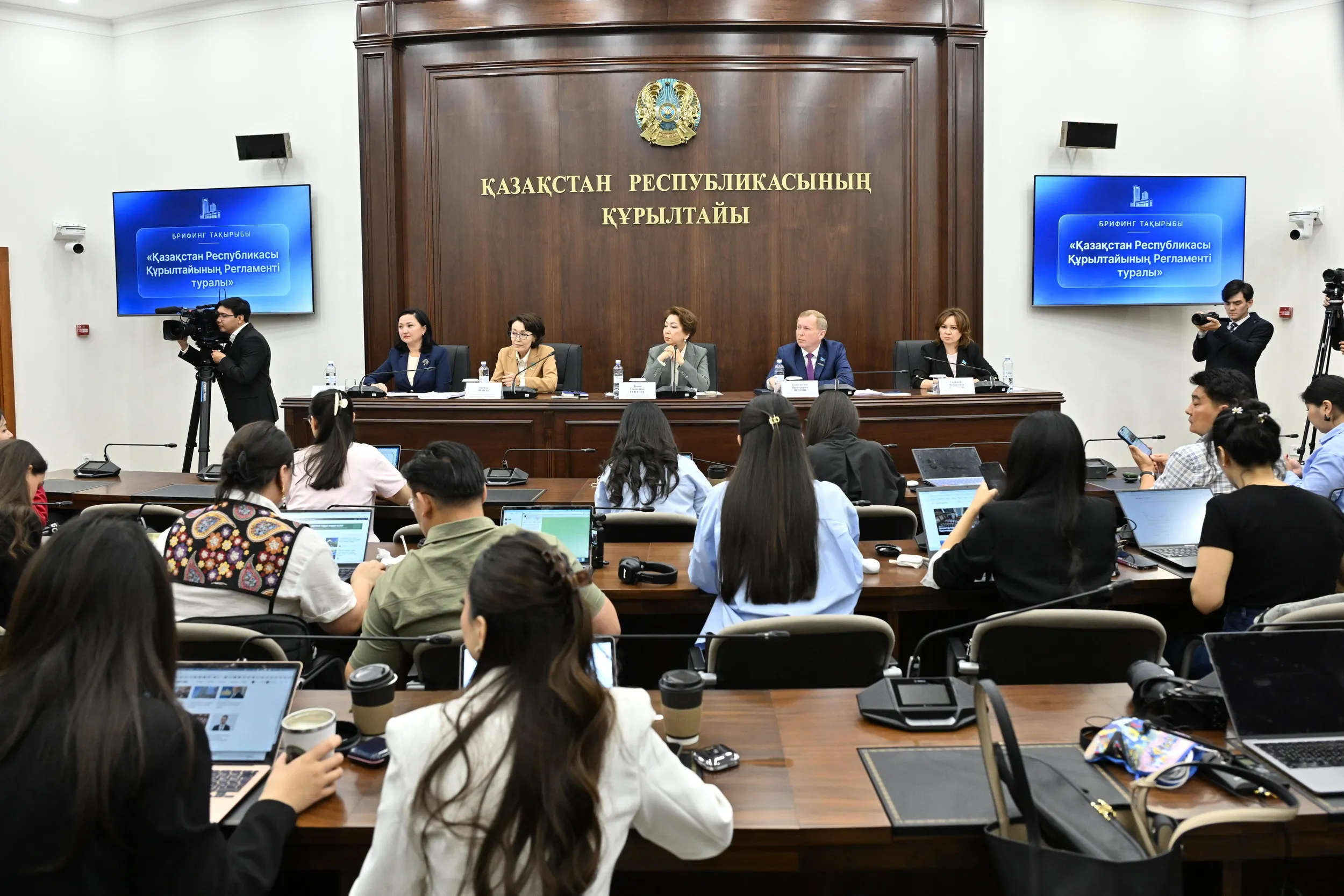
The warning concerns a briefing held at the Kurultai on 30 September on the draft law “On Ratification of the Convention on Cybercrime”. The event was attended by MP Unzila Shapak and Deputy Minister of Internal Affairs Sanzhar Adilov.
Given the extraordinary nature of the tragedy and the level of public concern, the Ulysmedia correspondent asked several questions about the deaths of 14 servicemen in the Caspian Sea.
Gumarova asked Unzila Shapak when the 146 million tenge collected by Kurultai members would be transferred to the families of the deceased servicemen. Addressing Deputy Minister of Internal Affairs Sanzhar Adilov, she also asked about reports of mass phone calls to authors of critical posts on Threads, during which callers allegedly introduced themselves as police department officers and pressured users to delete their posts.
Nazira Darimbet, President of the International Foundation for Protection of Freedom of Speech “Adil Soz”, said that internal regulations and procedural rules should not replace the fundamental guarantees of freedom of expression and the right to receive information enshrined in the Constitution of the Republic of Kazakhstan and the Law “On Mass Media”.
“Strict restrictions prohibiting journalists from asking questions outside the officially stated agenda are inconsistent with the principles of a democratic state. Parliament is the country’s highest representative body, and its role is not limited to the formal approval of legislation; it must also ensure that the authorities are accountable to society. Access to officials and members of parliament inside the parliament building is often the only opportunity for the media to obtain a prompt and direct response on issues of public importance. “Internal regulations and procedural rules should not replace the fundamental guarantees of freedom of expression and the right to receive information enshrined in the Constitution of the Republic of Kazakhstan and the Law ‘On Mass Media’. Treating an ‘off-topic’ question as a serious violation carrying the threat of losing accreditation creates a dangerous precedent and encourages self-censorship. A journalist is placed in an artificial dilemma: either fulfil their professional duty and raise urgent issues of public concern while risking the loss of access to the venue, or become little more than a conduit for official press releases,” Darimbet said.
Nazira Darimbet added that in international practice, particularly in the parliaments of EU countries and the United States, accreditation is merely a technical mechanism for ensuring security and order rather than a tool of censorship. According to her, there are no bans on questions that fall “outside the agenda”: matters of public concern take priority over an institution’s own agenda.
The Kurultai is Kazakhstan’s unicameral parliament. It was established as part of the 2026 constitutional reform, replacing the previous bicameral Parliament consisting of the Senate and the Mazhilis. The new Constitution entered into force on 1 July 2026, and the country’s first-ever elections to the Kurultai were held on 23 August. The Kurultai consists of 145 members elected for five-year terms.
The rules governing media work also changed under the new parliamentary system: journalists are no longer permitted to work in the corridors and may not ask questions at press conferences that are unrelated to the stated agenda.
The Kurultai Administration has said that international practice was taken into account when drafting the new rules. Ulysmedia examined how journalists work in parliaments in different countries to determine how common such restrictions are.