Kuryltai approves amendments in first reading: Adil Soz warns of risks to media and bloggers
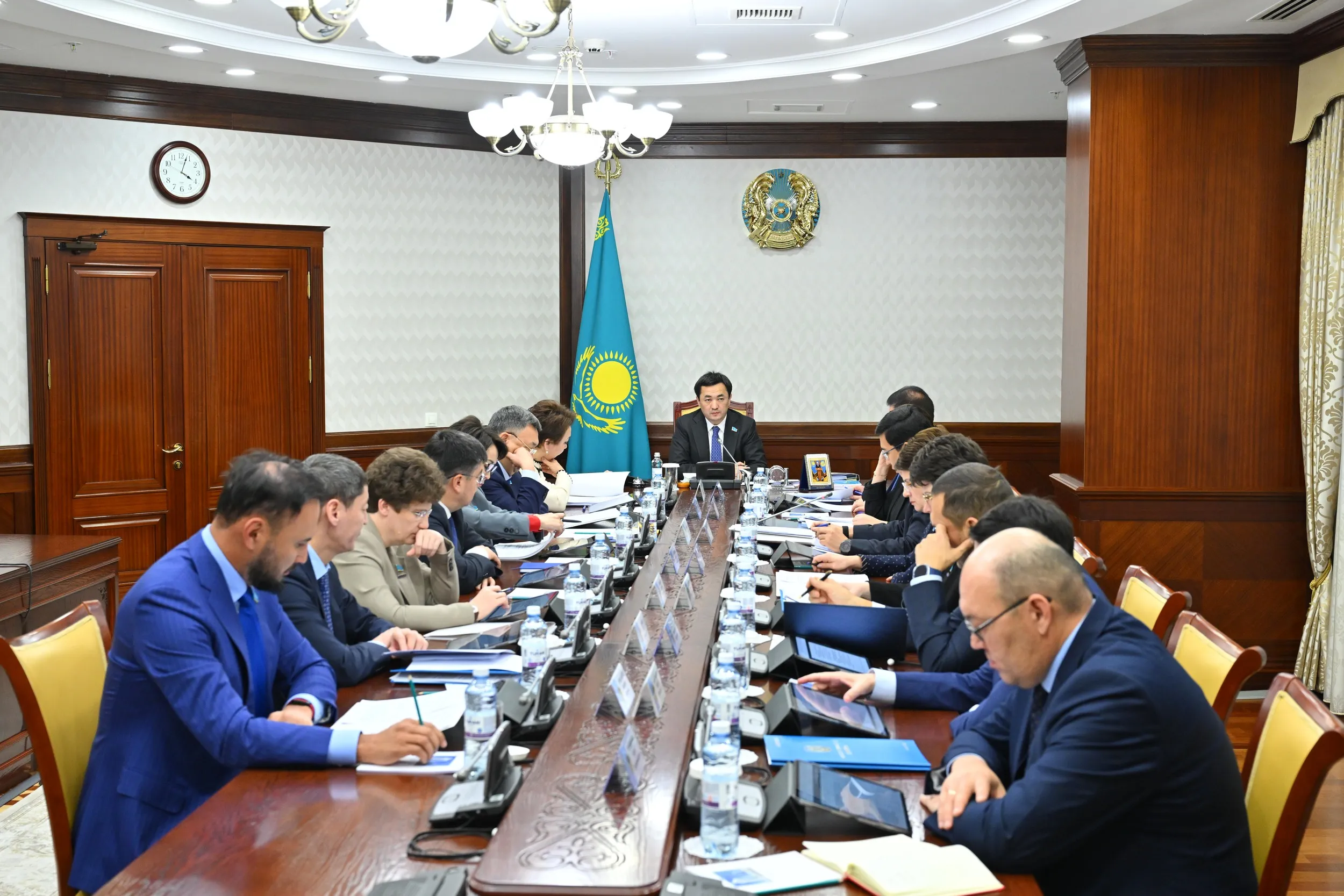
On November 18, the Kuryltai approved a package of amendments concerning online platforms and mass media in the first reading. The proposed legislation would introduce administrative liability for online platforms that distribute unlawful content or fail to comply with removal orders, require platforms to register representative offices in Kazakhstan, and impose new requirements on media outlets. The International Foundation for Protection of Freedom of Speech “Adil Soz” warns that the changes could pose significant risks to freedom of expression.
The amendments also include provisions on labelling official responses from government agencies and clarifying the rules governing the use of individuals’ photographs.
Importantly, these provisions are not yet in force. The bills have passed only their first reading and may still be amended during further parliamentary consideration.
According to Adil Soz, although some of the proposed changes are positive, the overall approach appears to prioritize greater state control over the information environment rather than the protection of freedom of expression.
“While the amendments contain some positive and neutral provisions, their overall direction is towards strengthening government control rather than protecting freedom of speech,” the foundation stated.
More than 5,000 followers — mandatory registration
One of the most controversial proposals is the creation of a government registry of online platform users and moderators with audiences exceeding 5,000 followers.
Under the proposed rules, account holders would be required to provide personal information, including their full names and Individual Identification Numbers (IINs). The foundation believes this would effectively eliminate anonymity for influential bloggers and administrators of public online communities.
“The amendments effectively introduce mandatory registration for online platform users and moderators (bloggers) with more than 5,000 followers. However, the bill does not make clear whether this requirement applies only to citizens of Kazakhstan or to foreigners as well.
“What if a Kazakhstani citizen lives abroad and runs a blog in a foreign language with 5,000 followers? Would they still have to register?
“If the requirement also applies to foreigners, does that mean every blogger in the world with more than 5,000 followers would have to register with Kazakhstan’s Ministry of Culture and Information?
“It would be impossible to distinguish audiences based on where content is distributed. Kazakhstani citizens can follow any foreign blogger, especially now that AI-powered automatic translation is widely available.
“It is obvious that this provision would be enforced selectively,” said Sergey Utkin, a lawyer with the Adil Soz Foundation.
Kazakhstan’s current mass media legislation allows authors to publish under pseudonyms. For independent journalists, activists, and creators of political and social commentary channels, anonymity can be essential to their personal safety.
The proposed legislation leaves several fundamental questions unanswered. Would Kazakhstani citizens running blogs from abroad be required to register? Would followers from other countries count towards the threshold? Would the requirement apply to foreign content creators whose publications are accessible to audiences in Kazakhstan?
The security of the personal information collected is another major concern.
A centralized database containing the names and IINs of popular account holders could become an attractive target for cyberattacks. A data breach could expose journalists and other authors who rely on anonymity, putting them at risk of doxxing, harassment, and persecution.
“A database containing the full names and IINs of influential content creators would be a valuable target for hackers. If it were leaked, journalists who had been working anonymously for their own safety could be identified, creating a direct risk of doxxing and persecution.
“At a minimum, the law should specify what data can be collected, where and how it must be stored, including encryption requirements, who can access it and how that access is logged, who is responsible for a data breach, and how quickly affected individuals must be notified,” said cybersecurity specialist Alexander Syromyatnikov.
Adil Soz argues that the legislation must clearly establish what personal information is collected, who can access it, how it is protected, and who bears responsibility in the event of a data breach.
Who will decide what content must be removed from social media?
Another significant part of the amendments concerns the removal of “unlawful content” from social media platforms without a court order.
The bill does not define the concept of “destructive content.” Meanwhile, the definition of unlawful content is already established in Article 14 of Kazakhstan’s Law on Online Platforms and Online Advertising.
“The ministry will be responsible for determining what constitutes unlawful content. The criteria may be highly subjective and politically motivated.
“Requiring online platforms’ representative offices in Kazakhstan to immediately remove such content without a court order gives executive authorities a mechanism to demand the blocking of accounts they consider undesirable,” Sergey Utkin explained.
According to the lawyer, the proposed changes are part of a longer process through which the authorities have expanded their powers to restrict online content.
“Just 10–12 years ago, media publications could only be suspended through a court decision. Later, the government introduced Article 41-1 into the Law on Communications, allowing law enforcement agencies and the Ministry of Culture and Information to block virtually any online content deemed to violate legal requirements.
“As a result, it was no longer the courts that determined whether content was unlawful, but the executive authorities themselves,” Utkin said.
However, the growth of social media created technical obstacles to this approach.
“The authorities can block an entire website within hours, but blocking an individual social media account is a different matter. Blocking an entire social network because of one undesirable account could create more problems for the government than it would solve.
“This situation persisted for years, leaving social media as one of the few spaces in Kazakhstan where independent authors retained a relative degree of freedom of expression,” the foundation noted.
According to Utkin, the authorities have gradually expanded their control over social media platforms.
“Initially, the Law on Online Platforms and Online Advertising required platforms to comply immediately with removal orders only in cases involving cyberbullying of children.
“The new amendments would extend this obligation to all unlawful content. At the same time, they would introduce administrative liability for platform owners who fail to comply with such orders,” the lawyer explained.
Utkin warns that, if adopted, the amendments could significantly narrow the space available to independent voices on social media. Executive authorities would be able to determine whether content is unlawful and require its immediate removal by online platforms without judicial authorization.
To reduce the risk of subjective decision-making, the foundation proposes that the removal of analytical, political, satirical, and other content of public interest should require a court order.
Adil Soz also calls for legal and technical safeguards against unjustified blocking.
First, restrictions should target specific unlawful publications rather than entire websites or platforms. Users should receive clear notifications explaining who restricted access, when the decision was made, and on what legal grounds.
“We also need a public registry of all blocking decisions. At present, many restrictions can only be confirmed through independent technical measurements.
“Access should be restored automatically and promptly once the content has been removed or the blocking decision overturned. There must also be accountability for delays.
“Furthermore, an entire platform such as Telegram or YouTube should not be blocked because of a single publication. The same applies to VPN services and encryption technologies.
“In 2019, Kazakhstan attempted to introduce a ‘security certificate’ that would have allowed authorities to decrypt users’ internet traffic. Such measures must be explicitly prohibited,” Alexander Syromyatnikov said.
The foundation additionally recommends establishing a public register of blocking measures and ensuring the prompt restoration of access once a violation has been addressed or the relevant decision reversed.
In its view, restrictions on entire platforms, VPN services, or encryption technologies in response to individual publications should be prohibited.
Profanity online: could satire and direct quotations be at risk?
The proposed legislation would also amend Article 434 of Kazakhstan’s Code of Administrative Offences, which governs liability for petty hooliganism.
The amendments would explicitly extend provisions concerning obscene language to publications in mass media and on online platforms.
Sergey Utkin considers the change unnecessary.
“Publicly accessible online publications have long been treated in practice as equivalent to public spaces. People using obscene language online have already been prosecuted for petty hooliganism.
“Adding this provision to Article 434 would therefore change nothing. Instead, it would raise questions about whether those previously punished for using profanity online had actually been prosecuted unlawfully.
“In everyday life, not every swear word or obscene expression constitutes hooliganism. In some circumstances, such language may be entirely appropriate and socially acceptable — for example, in certain artistic works, stand-up performances, or candid interviews, depending on the interviewee, the setting, and other circumstances,” Utkin said.
The lawyer emphasizes that the current provision does not penalize the use of particular words alone. It concerns actions that demonstrate disrespect towards others and disturb public order and the peace of citizens.
According to Adil Soz, the proposed wording could allow penalties to be imposed without considering these essential circumstances.
This is particularly important for journalism, where profanity may appear in direct quotations, interviews, satirical publications, or works documenting real events.
A newsroom that reproduces an interviewee’s words verbatim does not necessarily express disrespect towards others.
The foundation therefore insists that the law should focus on the context of a publication and whether the legally established elements of an offence are present, rather than on individual words.
Photographs of public officials and investigative journalism
The amendments also address the use of photographs of individuals that have already been made publicly available.
The proposed rules would allow individuals to prohibit the use of such photographs without their consent and introduce a clearer distinction between public activities and private life.
However, Adil Soz believes the proposed regulations do not sufficiently account for the public interest.
For example, information about a public official’s private life may be relevant to the public when it concerns property ownership, spending, or the use of public funds.
Excessive restrictions in such cases could make investigative journalism more difficult.
The mechanism for prohibiting the use of photographs also remains unclear. How would such a prohibition be formally established? And how could a newsroom verify whether it was in effect when an article was published?
Additional requirements for media outlets’ social media accounts
Another proposal would require media outlets to disclose the online platform accounts they use when registering as media organizations.
The requirement would be introduced through a new paragraph 10 of Article 22 of the Law on Mass Media.
Adil Soz considers the provision excessive and open to ambiguous interpretation.
For example, a newsroom might create a TikTok account after completing its official media registration. Would it be legally permitted to publish content through that account if it was not included in the original registration details?
It is also unclear whether similar restrictions could apply to journalists sharing their newsrooms’ publications through personal accounts.
“The amendments would make it mandatory for media outlets to list the online platform accounts they use when registering.
“However, the law does not require media outlets to undergo re-registration when those accounts change. So what is the purpose of this provision?
“Clearly, anyone — including media owners and journalists — can already share media content through their own accounts, provided they respect copyright.
“Why introduce an additional authorization requirement?
“The provision could be interpreted to mean that if an account is not listed in a media outlet’s registration certificate, the outlet cannot distribute its content through that account.
“Fine, then journalists could share the publications through their personal accounts. Or would that also be prohibited?
“This is clearly an unnecessary provision.
“It would be far more useful to establish that an online platform account listed in a media registration certificate has the same legal status as a media outlet.
“The law should also specify that when material produced by a registered media outlet is published on online platforms — regardless of who shares it — the same one-year limitation period for legal claims that currently applies to mass media should apply to that material,” Sergey Utkin said.
Instead of introducing further registration requirements, Adil Soz proposes ensuring equal legal protection for journalistic content regardless of the platform on which it is distributed.
In particular, the foundation recommends extending the one-year limitation period applicable to registered media outlets to their content published on social media.
Which amendments does Adil Soz support?
Not all of the proposed changes have drawn criticism from the foundation.
Adil Soz supports extending the mandatory pre-trial dispute resolution procedure for complaints about published content beyond traditional media to online platforms.
Such a provision would give content creators and complainants an opportunity to resolve disputes before taking legal action.
The foundation also welcomes the idea of requiring official responses from government agencies to be clearly identified.
In its view, distinguishing an official government position from the opinions of journalists or experts would help audiences better understand the information presented.
However, the labelling requirements must be clear and practical.
For example, the legislation should specify whether special labelling would be required when journalists quote only part of an official response or analyze it within a broader article.
Adil Soz received no response to Its request to participate in drafting the amendments
In October, the Adil Soz Foundation sent a letter to the Kuryltai requesting that its representatives be included in the working group responsible for developing the amendments.
The foundation has received no response to its request.
Adil Soz believes that independent experts, journalists, and human rights defenders should be involved in drafting legislation that directly affects freedom of expression.
The foundation also maintains that several provisions require further legal examination to determine whether they comply with Kazakhstan’s international obligations.
Adil Soz emphasizes that protecting the public from unlawful content must not become a means of restricting criticism or investigative journalism.