Journalists risk losing accreditation for violating government agencies’ regulations
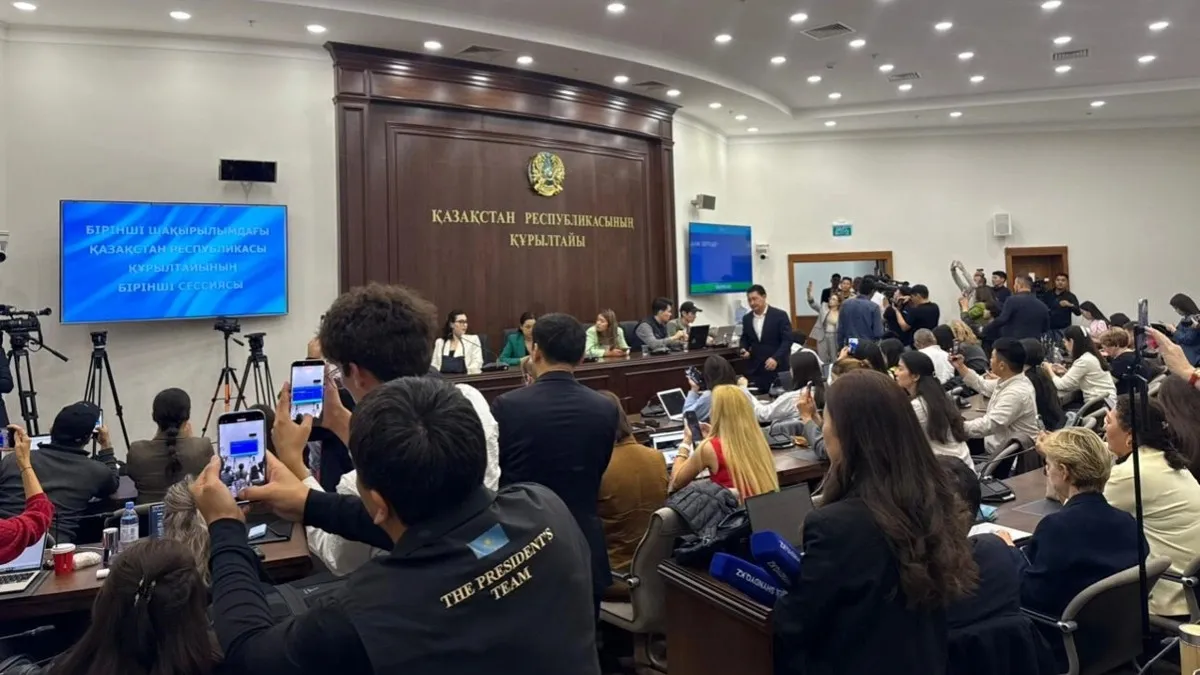
Over the past week, at least two Kazakhstani journalists have received warnings from government bodies for violating regulations established for the media. Among them is Ulysmedia.kz correspondent Asem Gumarova, who was warned for asking questions that did not relate to the stated topic of a briefing at the Kurultai.
On 6 October, Ulysmedia.kz reported that the editorial team had received a letter from Bolat Kalyanbekov, Deputy Head of the Kurultai Administration. The letter states that on 30 September Gumarova asked two questions that were unrelated to the agenda of the event. In the event of a repeated violation, the Kurultai Administration reserves the right to initiate the suspension of the journalist’s permanent accreditation for six months.
As previously reported, Asem Gumarova received the warning after attempting to ask a representative of the Ministry of Internal Affairs about an issue that was attracting significant public attention at the time — calls allegedly made to social media users following the tragedy in the Caspian Sea — but which formally fell outside the briefing’s agenda.
Sergei Utkin, a lawyer with the International Foundation for Protection of Freedom of Speech “Adil Soz”, points to a contradiction between the Law “On Mass Media” and the current Standard Accreditation Rules.
Paragraph 4 of Article 28 of the Law “On Mass Media” provides for the withdrawal of a journalist’s accreditation in the event of a violation of accreditation rules, or for disseminating false information damaging the business reputation of the accrediting organisation, where this has been established by a court decision that has entered into legal force.
At the same time, the Standard Accreditation Rules provide for the possibility of withdrawing accreditation for repeated failure to comply with the regulations of an event, access-control and internal security requirements, as well as for disseminating information obtained at the event through other media outlets.
“Accreditation rules are supposed to regulate the procedure for accrediting journalists. However, the Ministry of Culture and Information included provisions in the Standard Rules that determine how journalists may carry out their professional activities, which clearly falls outside the subject matter those rules are intended to regulate,” Sergei Utkin noted.
According to the lawyer, this has effectively given government bodies and organisations the ability to impose their own requirements on accredited journalists. These have included restrictions on the number of questions that may be asked, bans on asking questions outside the stated topic of an event, dress-code requirements and other conditions, violation of which may result in loss of accreditation.
“Journalists work in the public interest, seeking important information that organisations often try to withhold. But the relevant ministry sided with its fellow officials and gave them the ability to influence and intimidate journalists, thereby depriving society of the opportunity to receive information of public importance,” Utkin said.
In his view, the provisions of the Standard Rules introducing additional grounds for withdrawing journalists’ accreditation are inconsistent with the Law “On Mass Media”.
Adil Soz previously challenged the Standard Accreditation Rules in court, but the court dismissed the claim.
The International Foundation for Protection of Freedom of Speech “Adil Soz” considers particularly dangerous any practice in which a journalist’s continued accreditation depends on the content or number of questions they ask. The threat of losing access to a government body for asking a question of public interest may encourage self-censorship and restrict society’s right to receive information of public importance.