
Guidance for Journalists: How to Work on Election Day
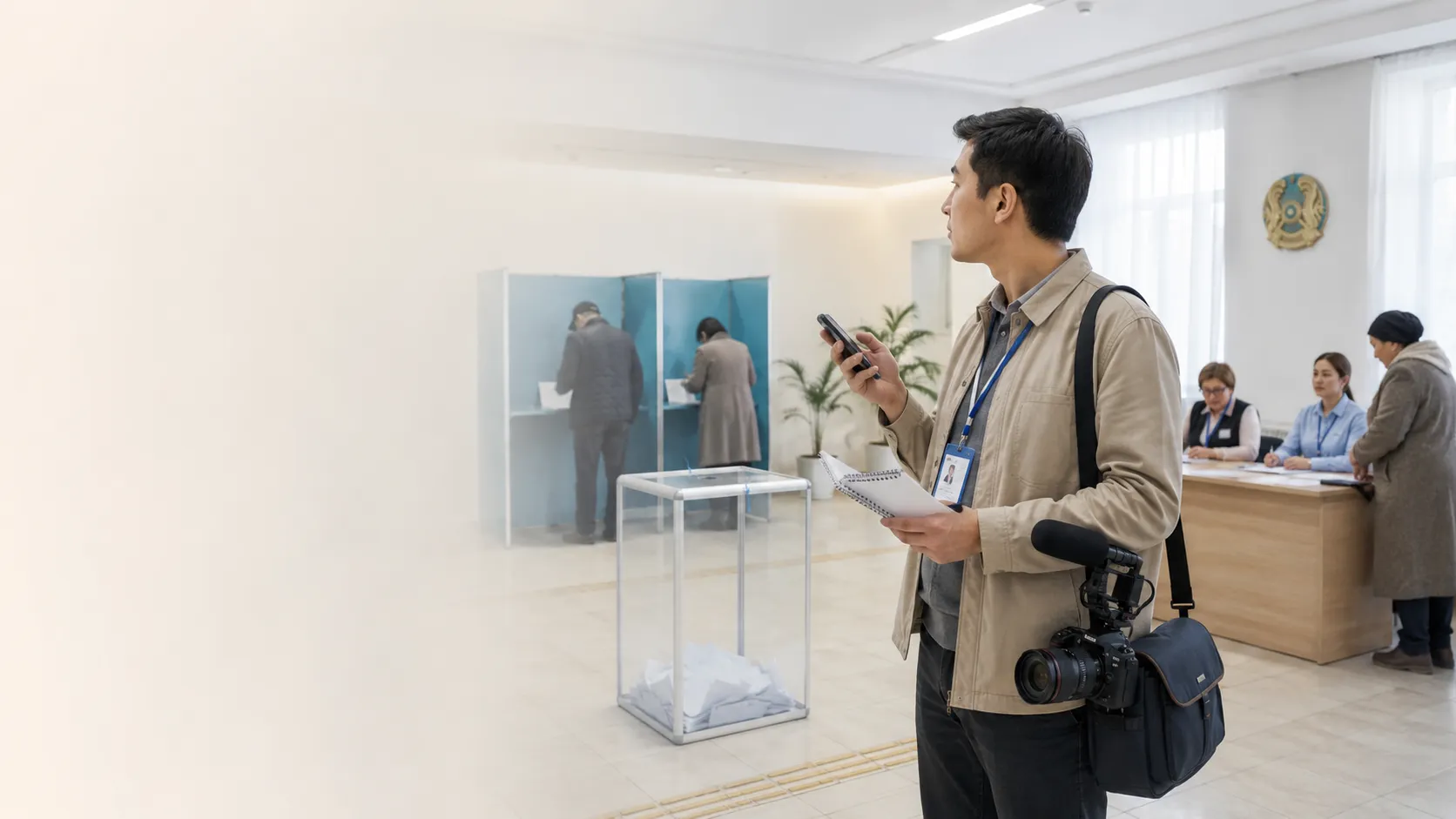
This Sunday, 23 August 2026, elections to the Kurultai will be held. We remind journalists of the rules they should follow while covering the vote to avoid violating the law.
Polls and forecasts: what cannot be published
Up to and including 23 August — that is, from the start of the election campaign through Election Day itself — it is prohibited to publish:
- public opinion poll results;
- forecasts of election results;
- other research related to the elections;
- materials concerning voting in support of candidates or political parties.
In addition, conducting public opinion polls inside polling premises or at polling stations is prohibited on Election Day.
Vox pops: are they allowed?
Short interviews with several citizens conducted by journalists are not considered public opinion polls as long as the results are not published in the form of aggregated numerical data.
This includes, in particular, stating:
- the number of people surveyed;
- the number of respondents supporting a particular position;
- percentage breakdowns of responses;
- ratings;
- other quantitative indicators.
In other words, individual comments from citizens may be published, but they must not be turned into a quantitative survey involving the calculation and publication of results.
Online polls are also subject to restrictions
Media outlets should pay particular attention to online polling.
Conducting election-related polls on websites and online platforms, as well as publishing their results with numerical data reflecting citizens’ opinions without complying with the requirements of the Constitutional Law “On Elections in the Republic of Kazakhstan,” may be treated as an administrative offence.
Election campaigning is prohibited on 22 and 23 August
Any election campaigning is prohibited on Election Day and on the day immediately preceding it.
Campaign materials posted online before this period may remain where they were originally published.
However, previously published campaign materials must not be moved or featured on the home pages of online resources.
How can journalists work at polling stations?
On Election Day, media representatives may be present at polling stations from the time they open until the voting results are established during the vote count.
Only one representative from each media outlet registered with the Ministry of Culture and Information may be present at a polling station at any given time. Television broadcasters are an exception and may have no more than three representatives present.
What documents should journalists carry?
Media representatives should have:
- a press or staff ID;
- an editorial assignment letter.
It is also advisable to carry a copy of the media outlet’s registration certificate issued by the Ministry of Culture and Information.
The press or staff ID and the editorial assignment letter must be certified with the seal of the media owner named in the media registration certificate.
What are journalists entitled to do during elections?
On Election Day, media representatives have the right to:
- attend meetings of election commissions;
- be received by election commission officials and obtain any information of interest from them;
- remain in the polling room of the relevant polling station during voting and the vote count, from a position that allows them to clearly observe all of these procedures;
- take photographs and make audio and video recordings, provided they do not interfere with voting or the determination of the results;
- review election commission protocols on voting results after the vote has concluded.